Why Is a Plagiarism Check Important?
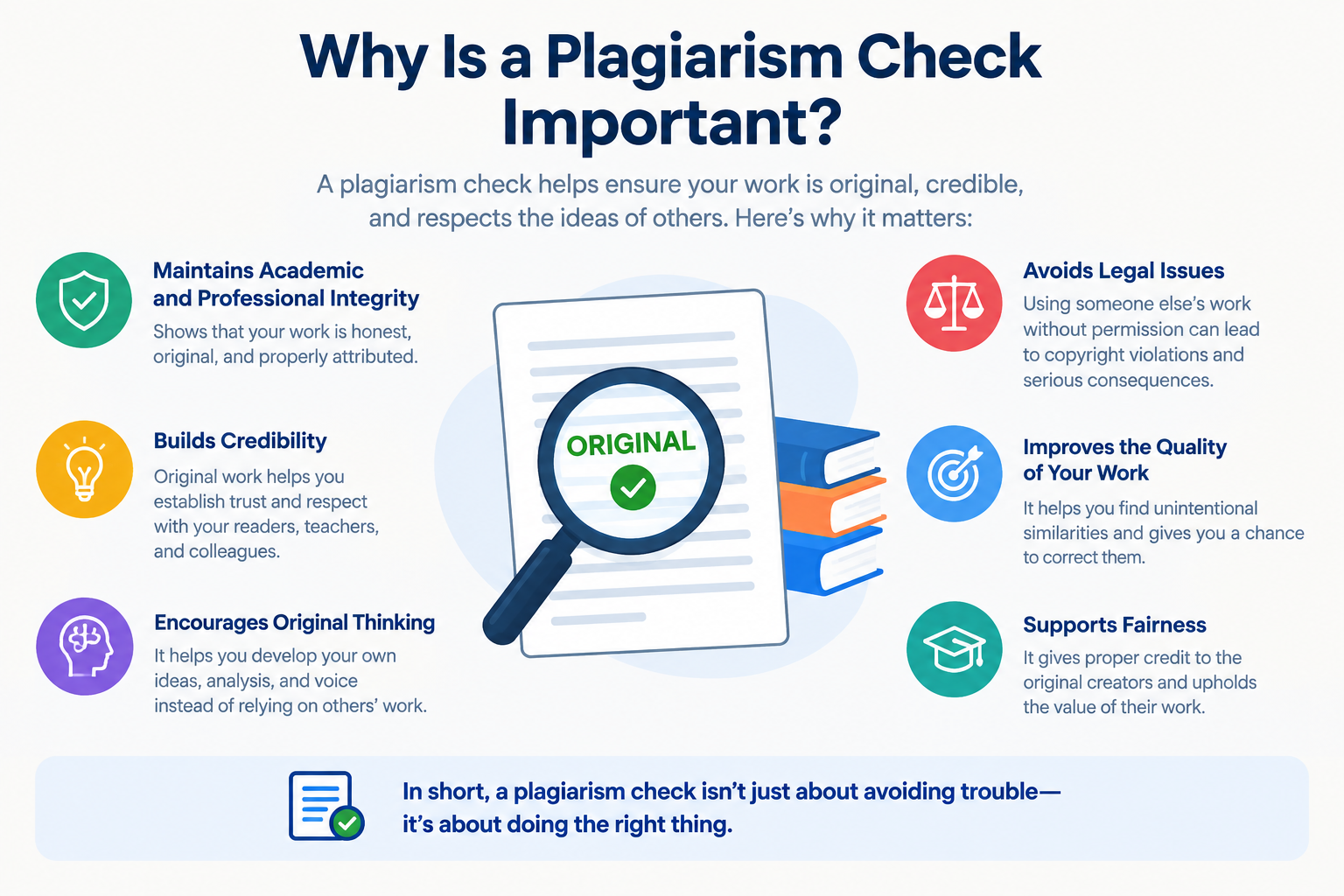
In today’s digital world, information is available at our fingertips. Students, teachers, researchers, writers, and businesses can easily find and use content from websites, books, articles, and other sources. However, using someone else’s ideas or words without giving proper credit is known as plagiarism. This is why plagiarism checking has become an important part of academic and professional writing.
What Is Plagiarism?
Plagiarism occurs when a person presents someone else’s words, ideas, research, images, or other creative work as their own without proper acknowledgment. It can happen intentionally or accidentally. For example, copying paragraphs from a website without citing the source is plagiarism. Even when information is paraphrased, the original source may still need to be credited.
A plagiarism checker helps identify similarities between a piece of writing and existing content. This allows writers to review their work and make necessary corrections before publishing or submitting it.
Why Is Plagiarism Checking Important?
1. Protects Originality
One of the main purposes of a plagiarism check is to ensure that content is original. Whether it is a school assignment, research paper, blog post, or business article, original content demonstrates the writer’s own understanding and contribution.
2. Helps Avoid Academic Problems
For students and researchers, plagiarism can lead to serious academic consequences. Universities and educational institutions often have rules requiring students to properly cite sources. Checking work for plagiarism before submission can help writers identify accidental similarities and correct them.
3. Builds Trust and Credibility
Original and properly referenced content is more trustworthy. Readers are more likely to have confidence in writers who clearly distinguish their own ideas from information obtained from other sources.
For businesses, websites, and professional writers, maintaining credibility is especially important. Publishing copied content can damage a person's or organization's reputation.
4. Encourages Better Research and Writing
A plagiarism check is not only about finding copied sentences. It can also encourage writers to develop their own ideas and express information in their own words. When writers understand the importance of citations and paraphrasing, they generally become more careful and effective researchers.
5. Protects Intellectual Property
Authors, researchers, journalists, artists, and other creators invest time and effort into producing original work. Proper attribution recognizes their contribution and respects their intellectual property.
Plagiarism checking can help identify potentially copied material and remind writers to provide appropriate credit to the original creators.
6. Improves Content Quality
A plagiarism report can encourage writers to review sections that are too similar to existing sources. During this process, they may discover that certain sentences need better paraphrasing, clearer citations, or stronger original analysis.
As a result, plagiarism checking can become part of the editing and quality-control process.
Is a High Similarity Score Always Plagiarism?
Not necessarily.
A plagiarism or similarity checker generally identifies matching or similar text; it does not automatically determine whether plagiarism has occurred. Common phrases, quotations, references, technical terminology, and properly cited material may contribute to a similarity score.
Therefore, a plagiarism report should be reviewed carefully by a person. Writers should examine each highlighted section and determine whether a citation, quotation, paraphrasing, or other correction is appropriate.
How Can Writers Avoid Plagiarism?
Writers can reduce the risk of plagiarism by following a few simple practices:
-
Keep track of sources while researching.
-
Use quotation marks for directly copied words.
-
Cite sources according to the required style.
-
Paraphrase information genuinely rather than simply changing a few words.
-
Add original analysis and ideas.
-
Check the final document before submitting or publishing it.
Conclusion
Plagiarism checking is an important part of responsible writing. It helps writers protect originality, recognize the contributions of other creators, maintain credibility, and identify areas where citations or paraphrasing may be needed.
However, a plagiarism checker should be viewed as a supporting tool, not the final judge of plagiarism. Good research practices, accurate citations, careful paraphrasing, and original thinking remain essential. By combining these habits with plagiarism checking, writers can produce content that is both credible and respectful of other people's work.